A thorough tree evaluation shouldn't end with a verbal opinion. Barton's Tree Care evaluates trees and documents what we find so property owners have something clear and written to work from when deciding what comes next.
Every significant tree is embedded in a set of conditions — proximity to structures, soil, neighboring trees, root systems, visible signs of change — that together determine how that tree should be understood. An experienced eye walking the property can reveal a lot. But a verbal impression at the end of that walk disappears the moment the conversation ends.
An arborist report puts what was observed during a professional evaluation into written form. Barton's Tree Care has been evaluating trees for property owners throughout Crofton and Anne Arundel County since 1989. When what we find is worth writing down, we write it down. If the situation calls for a focused evaluation of hazard potential, we handle that through a tree risk assessment. The two overlap in practice, but they start from different questions.
Not every tree situation calls for formal documentation. These are the circumstances where a written record of a professional evaluation tends to matter most.
A mature tree that's changing — new growth patterns, bark conditions you haven't seen before, thinning canopy sections — is worth looking at closely. When the changes are complex enough that a verbal summary won't capture the full picture, written documentation of what was actually observed becomes useful.
When a large tree sits near a home, outbuilding, vehicle, or other significant asset, understanding its current condition — and having that understanding documented — can inform decisions about maintenance, timing, and appropriate next steps.
Trees that are worth keeping but show signs warranting attention benefit from a documented starting point. A written record of what was observed at a given point in time provides meaningful context for any future evaluations.
Whether the appropriate next step is pruning, continued monitoring, or a more significant intervention, a written record of what was found — and what prompted the decision — is more useful than memory alone.
An arborist report is only as useful as the evaluation behind it. Barton's approach begins with looking at the actual tree.
Evaluation begins with direct observation — trunk, major limb structure, canopy condition, and any visible indicators of change or concern. We look at the surroundings too, because the relationship between a tree and its context is part of the picture. This is where arborist documentation and a more focused risk evaluation often start from the same questions.
Not everything we observe carries equal weight. Useful documentation reflects that. We note what was found, where, and in what context — distinguishing between conditions worth tracking, conditions that suggest action, and characteristics typical for a tree of that species and age.
Written findings should be readable. Barton's communicates what we observed and what we think it means in plain terms — what was seen, what it indicates, and what next steps make sense to consider. Where related services apply — whether health evaluation, targeted pruning, or removal — we'll say so and explain why.
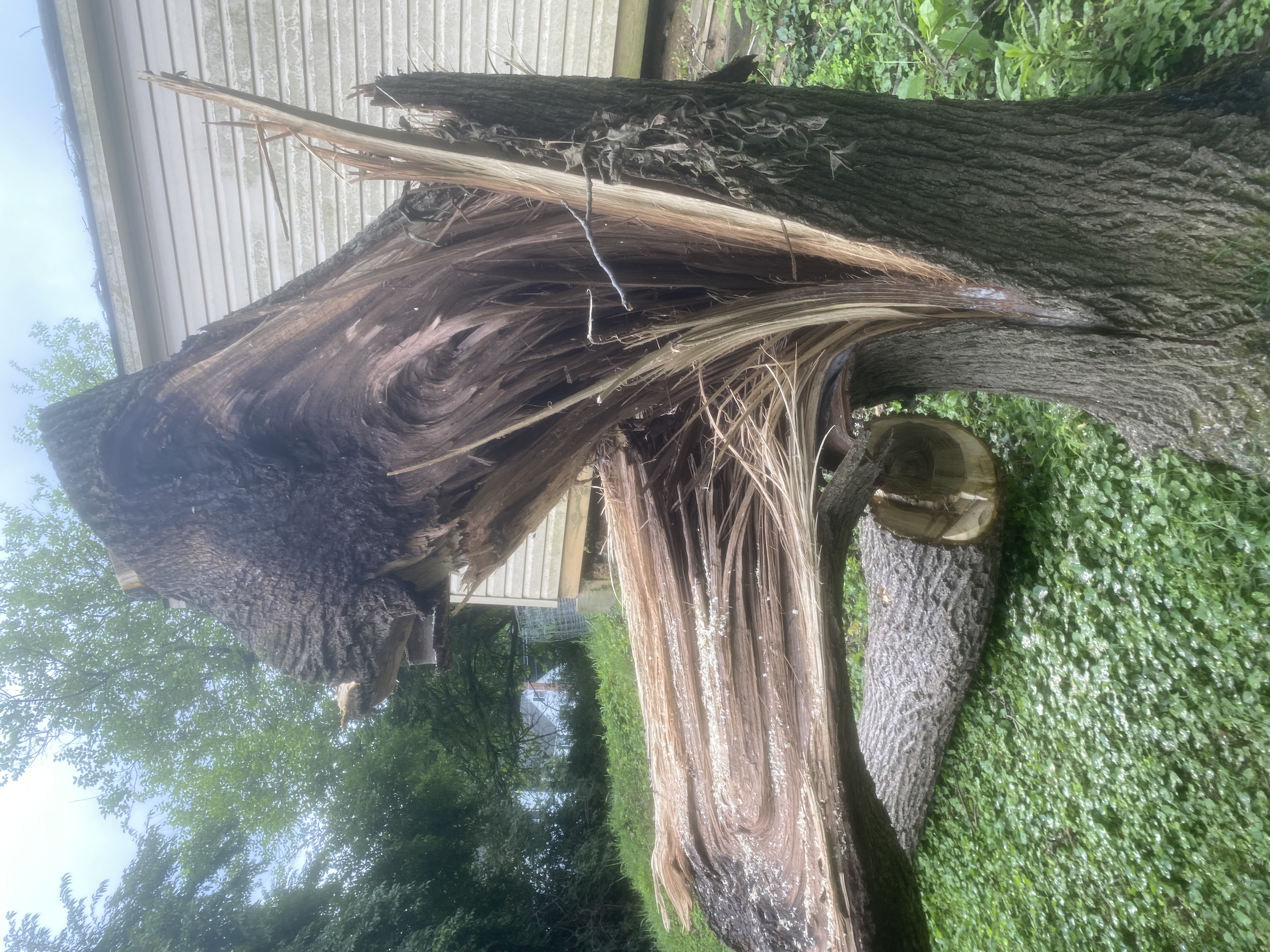
Trees grow. Conditions change. A tree that posed minimal concern several years ago may look different today — and what's around it may have changed too. Structures age, properties are developed, and the ground beneath a tree isn't always the same as it was. What a tree looks like now is the relevant question.
When evaluating a tree near a structure or high-value property, Barton's looks at the current condition of the tree and its surroundings together. A written record of what was found — and what it suggests — is more useful than a conversation that no one can refer back to. If the concern centers specifically on hazard potential, a focused tree risk assessment is the more targeted starting point. If the question is more about a tree's overall health and whether it can be maintained long-term, see our tree health and preservation page.
Call (410) 710-0164Useful documentation starts with useful observation. And useful observation takes experience with trees. Barton's has been working trees in Maryland since 1989.
Ed Barton III has been evaluating and working trees in Maryland since 1989. That experience — across hundreds of properties, species, and conditions throughout Anne Arundel County — is the difference between documentation that reflects genuine understanding and documentation that reflects a checklist.
MD Tree Expert License #133 & #1883. Barton's operates as licensed tree professionals in Maryland. When findings come from a licensed professional who has actually examined the tree, the evaluation carries appropriate weight.
Barton's is based in Crofton and serves communities throughout Anne Arundel County — Crofton, Gambrills, Odenton, Davidsonville, Annapolis, Edgewater, Severna Park, and surrounding areas. Local experience with local trees and local properties.
Questions homeowners commonly ask about arborist reports and what to expect from the evaluation process.
Barton's evaluates trees and documents observed conditions for property owners throughout Crofton, MD and the surrounding Maryland communities. Free evaluations.
Owner Direct: (443) 306-3037